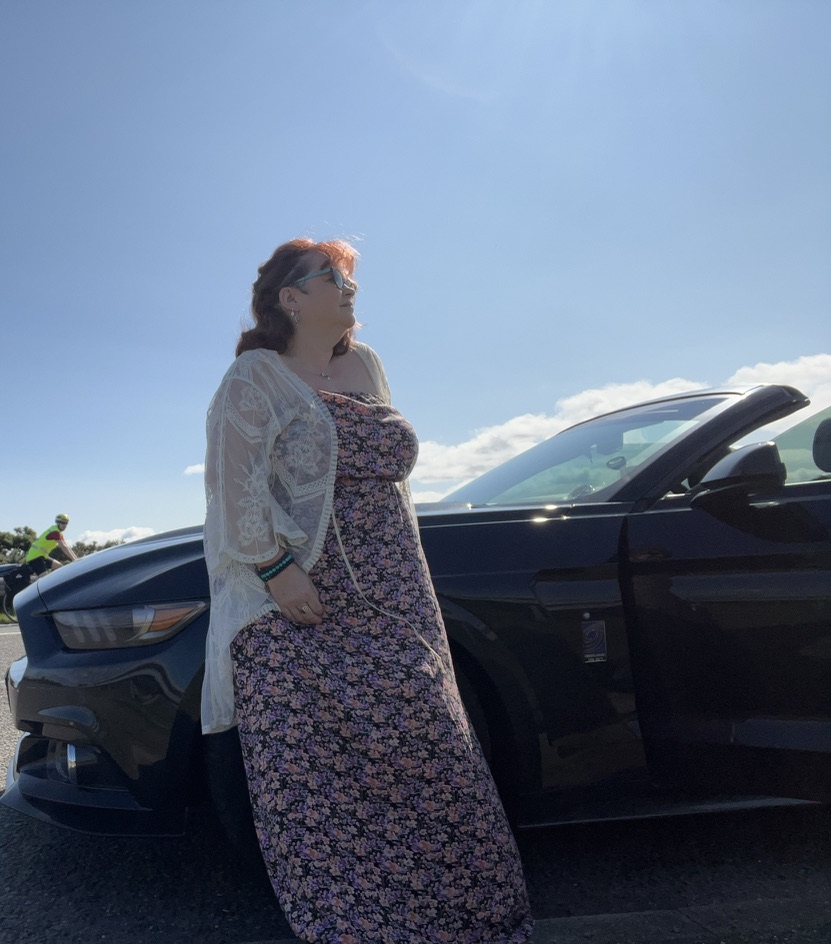
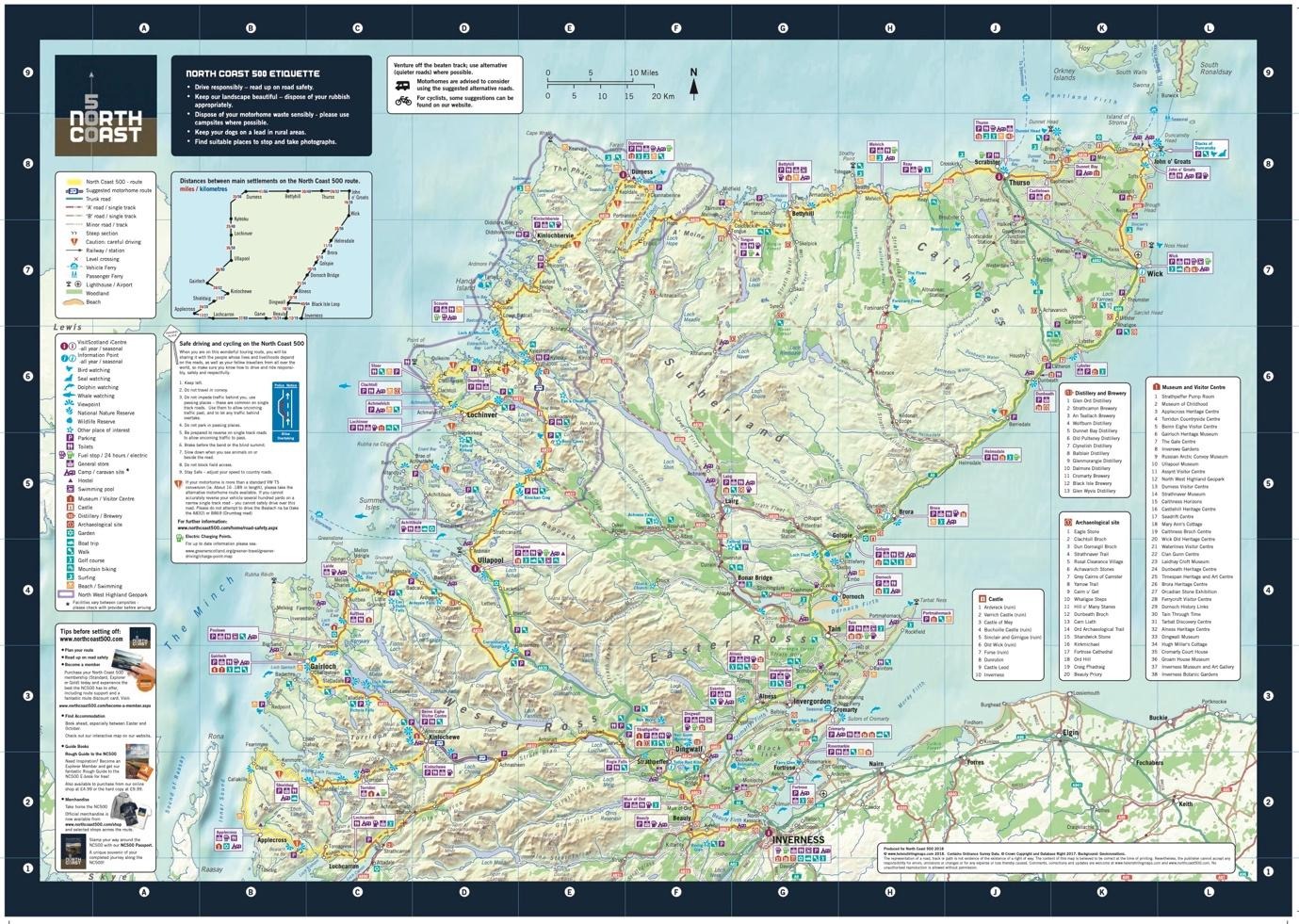
July 21st, 2023 I decided to leave the secure blanket of planned, full-time employment and embark on the adventure of a lifetime. For two, sun-filled weeks I drove my dream car, a black and purple, convertible, V6 Ford Mustang around the iconic North Circular 500 (and just to add to the adventure, it was a left-hand drive American import, so quite a challenge on the winding, narrow Scottish roads!).
With the 500 miles to get to the start of the route in Inverness, the Purple Pixie and I meandered some 1,500 miles, taking several photographs and composing poetry each day, absorbing the raw power of nature in all her brutal beauty tinted with the stories of the past.
With the 500 miles to get to the start of the route in Inverness, the Purple Pixie and I meandered some 1,500 miles, taking several photographs and composing poetry each day, absorbing the raw power of nature in all her brutal beauty tinted with the stories of the past.
The result was a collection of poetry, photography and history as a small representation of the inspiration, peace, and discovery I found along the way.
Silence has been pleasurable
A pause
To hear the songs of reality and truth
Surrounding all
Before I return
(c) Leena Batchelor
The book is called “Arcadia – a Pictish Paradise” and details can be found here. Some of the highlights from my amazing trip are below:
The first ballad – Arrival ~ Loch Lomond, Trossachs, Balloch
Loch Lomond and The Trossachs National Park is a national park in Scotland centred on Loch Lomond and the hills and glens of the Trossachs, along with several other ranges of hills, covering much of the western part of the southern highlands.
Balloch is an enchanting village on the south-west shores of Loch Lomond and the destination for my first stop, known as the gateway to the national park.
Trepidation fluttered in my heart – I was alone in a vast country, and the magnitude of my undertaking was dawning upon me. I had come to travel an iconic route, planned months prior to my decision to open a bookshop, and now the journey was marking a transition in my life, from perceived security to exhilarating vulnerability.
This stage marked my arrival, in every sense of the word and emotion.
The second ballad – Exploration
Inveruglas is a hamlet on the west shore of Loch Lomond towards the north end of the loch, within the historic county of Dunbartonshire. At the mouth of Inveruglas Water is a low, flat island covered with Alder trees, where William Wallace is reputed to have sought refuge.
The area was the seat of Clan MacFarlane for over five centuries, and before that, the settlement of Arrochar was a target for Viking raiders who used its proximity to Loch Long and Loch Lomond to target inland settlements. In 1697, the first part of Inverioch House was built in Arrochar by John, the 19th Clan Chief. Several MacFarlane graves lie within the land.
Every step, every mile, started to fill with wonder as I wandered – history, nature, and wonder at my new-found freedom.
The third ballad – Ancestral
To the east of Inverness are the Clava Cairns, exceptional remains of an ancient cemetery, set on a terrace above the River Nairn. They date back around 4,000 years and were built to house the dead. The cemetery complex of passage graves, ring cairns, kerb cairns and standing stones remained a sacred place in the landscape for millennia, and provides many clues to the beliefs of Bronze Age society.
What remains today would have once been part of a larger complex. Two parts of the complex, Balnuaran of Clava and Milton of Clava, are open to the public. The sites contain a range of prehistoric burial monuments and the remains of a medieval chapel.
This site called to my soul more than any another, and I felt its resonance deep within. I don’t know whether this was due to the spiritual path I had recently embarked upon, or the fact that I had taken a period of time to truly pause and disconnect from the busy treadmill of life; maybe a combination. Either way, I started to understand what being a part of the legacy of time and history meant to me.
The fourth ballad – Release
Tain is a town in Easter Ross in the Scottish Highlands. In Gaelic it’s known as Baile Dhubhthaich, the town of St Duthus. It mostly grew up in Victorian times and has changed little since then. Its main attraction for visitors is the Glenmorangie distillery. ‘Tain’ actually means thin tin plate – the water looks like a sheet of tin
By this stage in the journey, I had thoroughly relaxed my mind and became receptive to emotions and thoughts I had held at bay for many years – hence this ballad’s title ‘Release’.
The fifth ballad – Discovery
The highlight? A full day on the Orkneys. So much outstanding history and landscape.
FULL CIRCLE
Beginnings and endings came full circle at the zenith of the wheel, at the top of the road before the cycle down.
Yet I did not fear or feel a downward spiral, a looming descent, but a balance atop the Ferris wheel of time, a tipping of choice –
go forward, to stay on the same path;
go forward, and decorate the path with the jewels of choice.
I opened both palms, mirror images of identical map lines, and understood.
Whichever direction, whatever action, was a fate of sorts – it was how I journeyed and rode the wheel that mattered, not the turning itself, and certainly not the impotent railing against perpetual momentum.
I clasped both palms around the fulcrum and swung into the odyssey of discovery my life now presented.
(c) Leena Batchelor
The Orkney Islands are an archipelago in the Northern Isles off the north coast of Scotland, consisting of around 70 islands, of which 20 are inhabited.
The islands have been inhabited for at least 8,500 years, originally occupied by Mesolithic and Neolithic tribes before the Picts. Colonised and later annexed by Norway 875, the islands were absorbed into the Kingdom of Scotland in 1472.
The local people are known as Orcadians; they speak a distinctive dialect of Scots Gaelic and have a rich body of folklore. Orkney contains some of the oldest and best-preserved Neolithic sites in Europe.
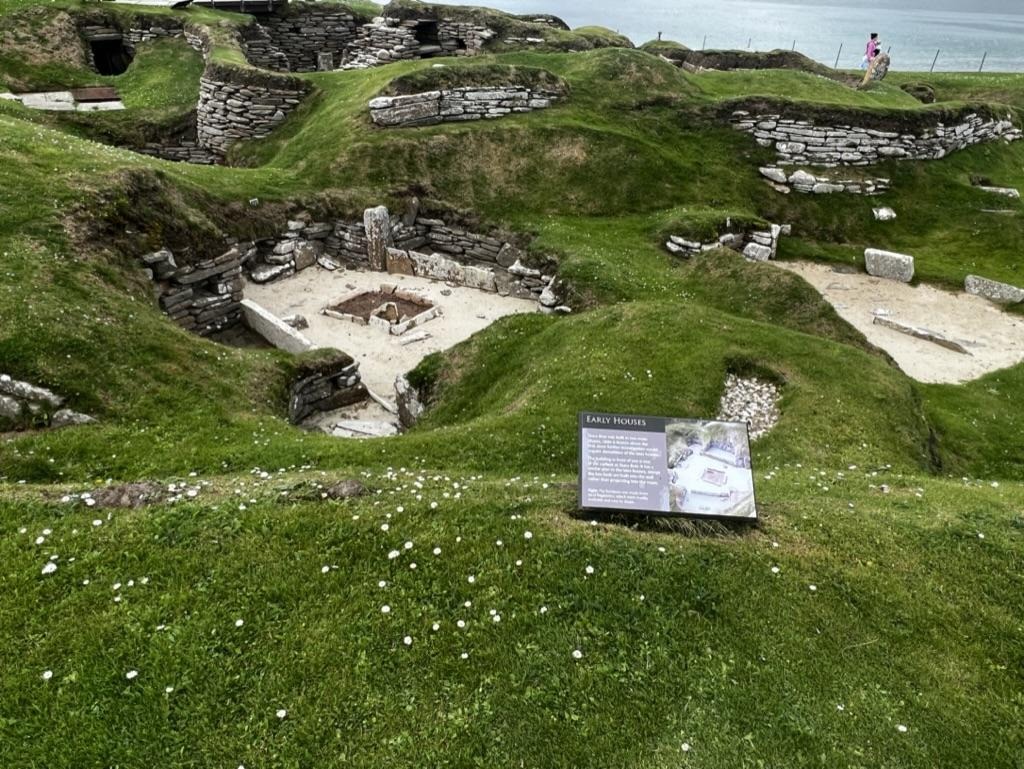
Few can be unaware of the name Skara Brae, or its significance. Long before Stonehenge or even the Egyptian pyramids were built, Skara Brae was already a thriving village, and is the best-preserved Neolithic settlement in Western Europe. First uncovered by a storm in 1850, Skara Brae remains a place of discovery today. but the reason why it was abandoned still remains a mystery.
The Ring of Brodgar is a massive stone circle, originally consisting of 60 stones, 36 of which survive today, along with at least 13 prehistoric burial mounds and a large rock-cut ditch surrounding the stone circle.
Like Stonehenge, many theories surround the possible purpose of the stones, from celebrating the relationship between living and past communities, to lunar observations.
The main ring is dated as being constructed sometime between 2600 and 2400 BC, and the surrounding burial mounds and stone setting likely date from between 2500 and 1500 BC.
The sixth ballad – Returning
The penultimate stop and long desired visit to Eilean Donan Castle was all I hoped it would be (my final stop was actually Stirling for two nights, which could fill a collection all on its own! Even though I couldn’t visit the castle due to a wedding taking place, I did visit the site of Bannockburn and the monument to Robert the Bruce.)
Eilean Donan is recognised as one of the most iconic images of Scotland. Situated on an island at the point where three great sea lochs meet, it is little wonder that the castle is now one of the most visited and important attractions in the Scottish Highlands. Although first inhabited around the 6th century, the first fortified castle was built in the mid-13th century and stood guard over the lands of Kintail, watching Scotland’s feudal history unfold. Eilean Donan played a significant role in the Jacobite risings of the 17th and 18th centuries, which ultimately culminated in the castle’s destruction.
The castle has been used in many films, including ‘Elizabeth: the Golden Age,’ James Bond’s ‘The World Is Not Enough’ and ‘Braveheart’. Fans of 1980s fantasy film Highlander may also recognise the castle as the seat of Clan MacLeod.
Ancient legend tells that Eilean Donan itself is the burial place of the king of otters, and his coat of silver is buried somewhere on the island, claiming that whoever finds his coat will be rewarded with immortality and invincibility.
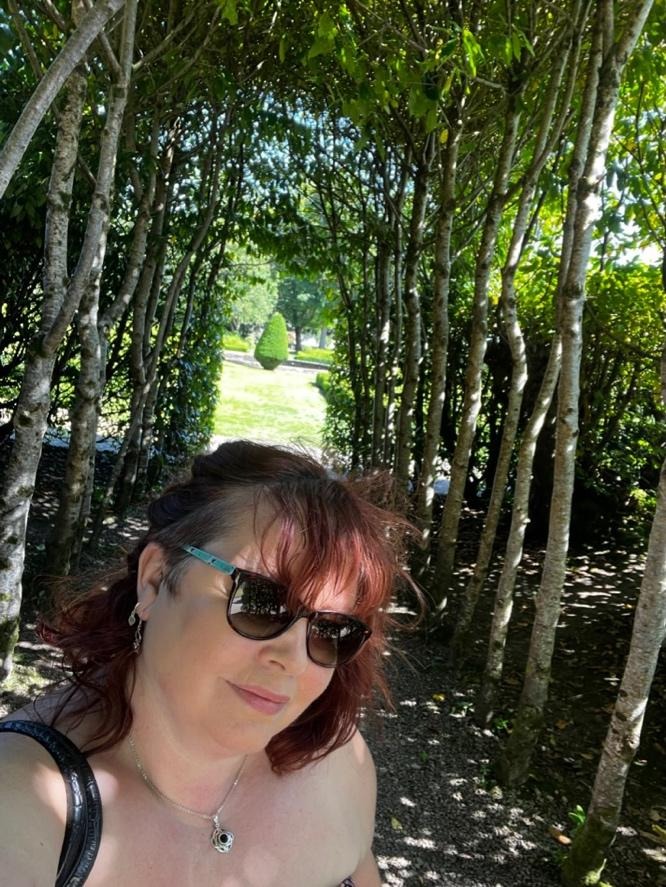
Will I go back? I’m already planning the return!
 Pixie Muse Poetry & Prose